
Reimagining Visme Onboarding for AI-Powered Content Creation
Turned funnel data and user research into an editor-first onboarding concept designed to bring new users straight into creation through Import and AI, and aligned with leadership on the direction.
Overview
Visme is an AI-powered visual content creation platform that helps individuals and teams create presentations, documents, and other visual content.
I worked on reimagining the onboarding experience to help new users start creating faster. Through funnel analysis, user research, and design exploration, I developed an editor-first concept that gained leadership alignment and was selected for engineering development and a live A/B test.
My Role
- Analyzed funnel data and user journeys with the PM, and ran a 400-respondent survey on how people use template libraries.
- Led UX exploration and developed editor-first onboarding concepts, from the first screen to the Add flow.
- Collaborated with product and design leadership to align the direction and scope the first experiment.
Context
For new users, creating their first project is a key step toward experiencing Visme's value. They can start with AI, templates, blank projects, or existing files.
However, the existing onboarding took users through setup steps and a dashboard before they could reach the editor, adding decisions before the actual creation process began.
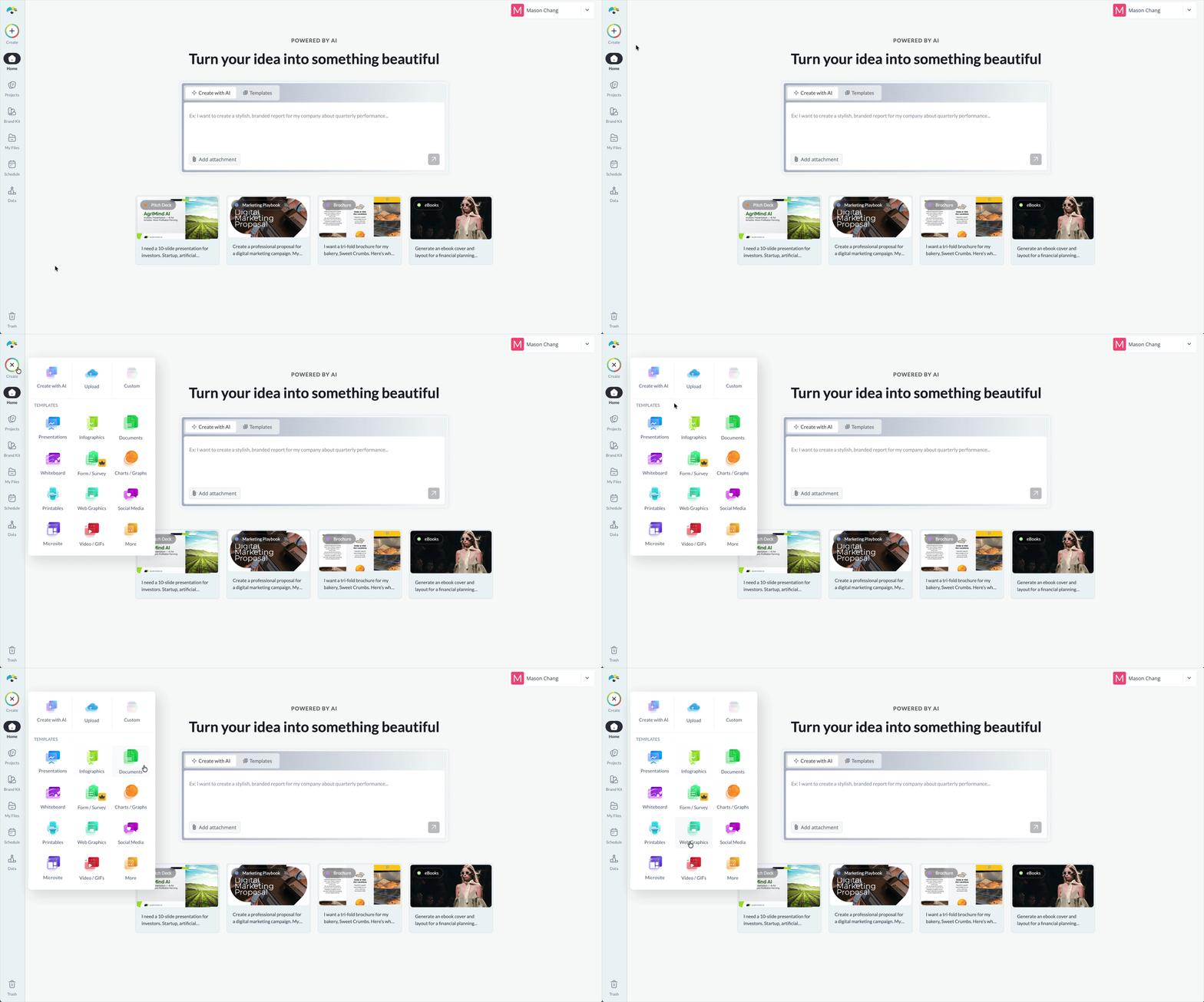
Users can explore different ways to start a project through the dashboard, Create menu, or template library.
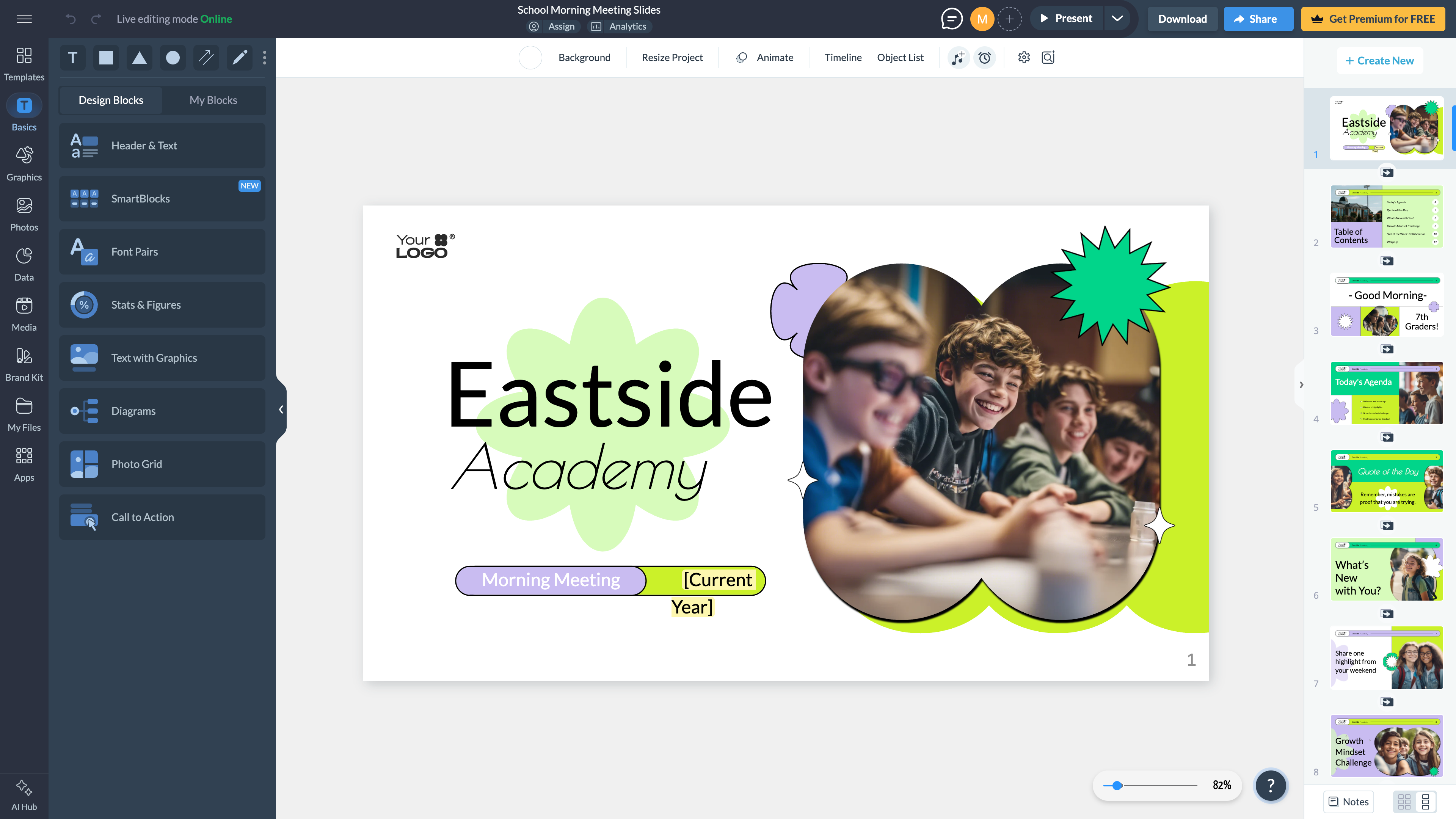
The editor is where users build and refine their projects after choosing how to start.
The Challenge & Goal
The existing onboarding required new users to complete a multi-question segmentation survey and navigate several creation options before reaching the editor. Reviewing these questions, we found that many primarily served business and marketing needs rather than helping users start creating.
Funnel data showed that 57.9% of newly registered users did not create their first project during the measured period, highlighting significant drop-off before first project creation.
Our goal was to reduce friction in this early journey and help more users reach their first meaningful creation faster, rather than simply increasing the number of empty projects created.
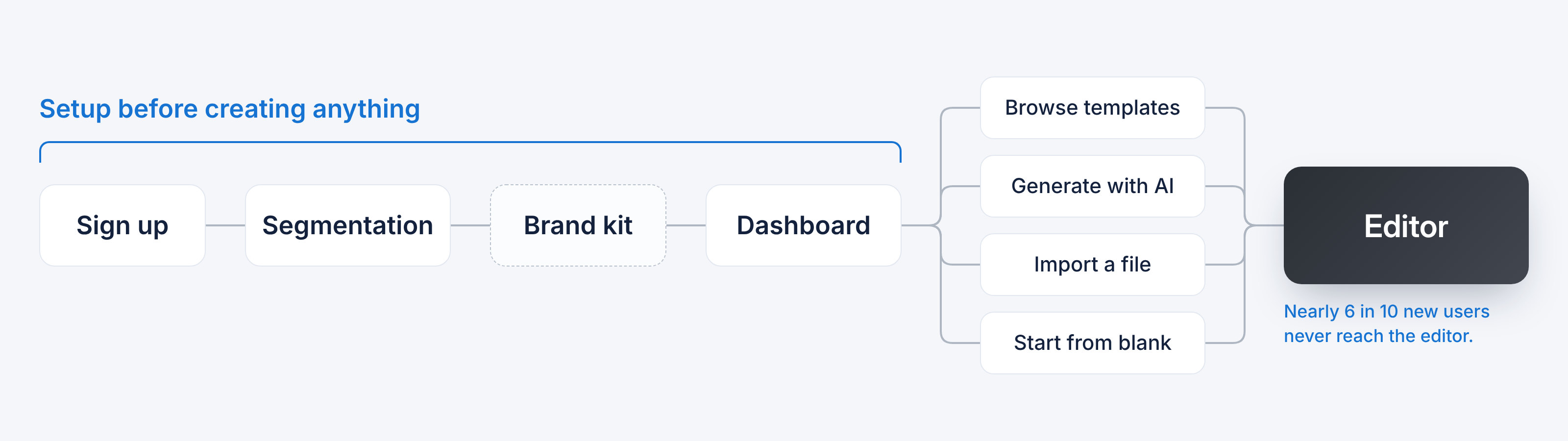
The existing onboarding flow takes users through multiple setup steps and creation options before they can reach the editor and start creating.
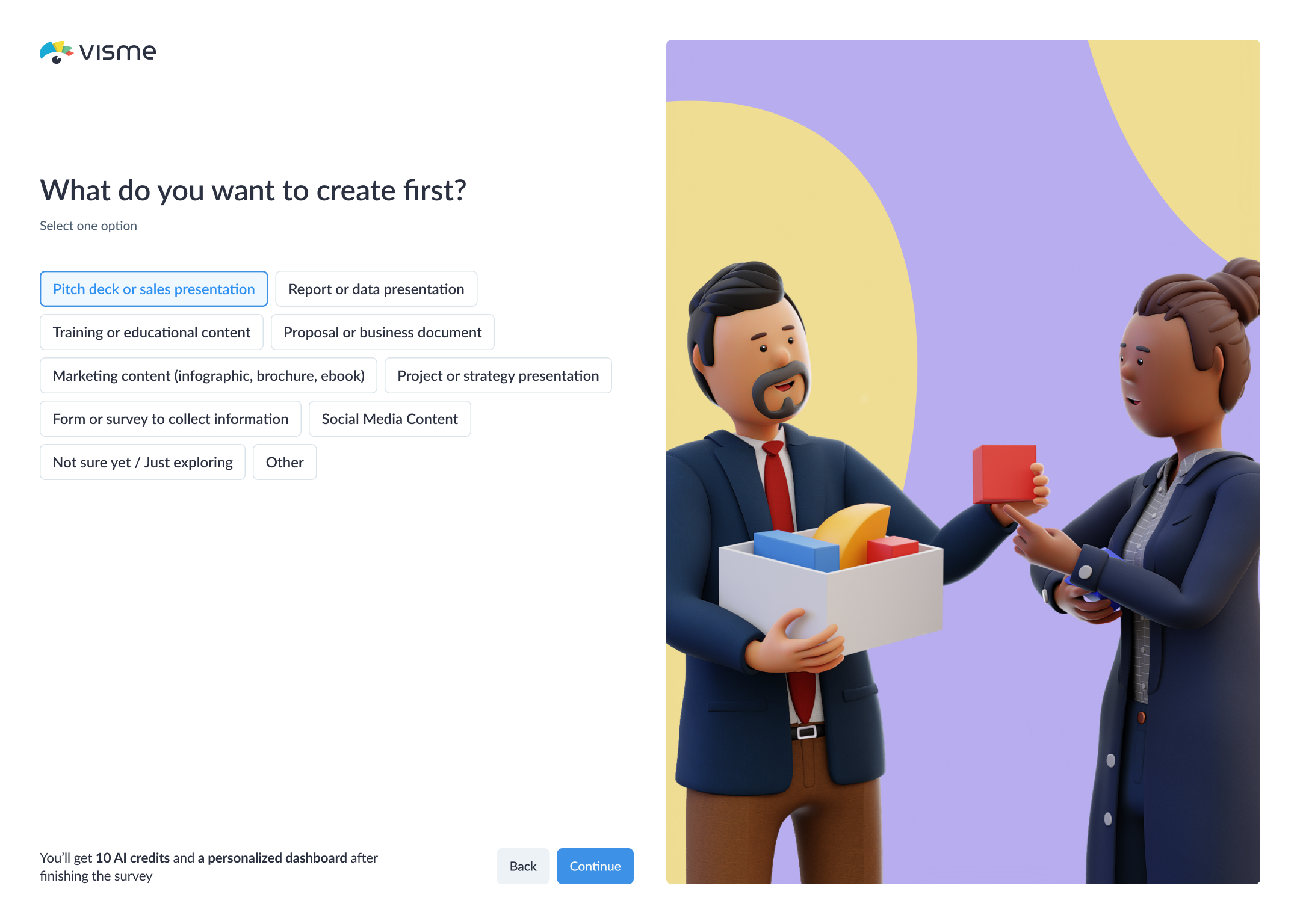
New users had to complete an eight-question onboarding survey before reaching the dashboard and choosing how to start their first project.
Research & Insights
To understand what was holding new users back, I audited the existing onboarding experience and worked with the PM to analyze funnel data across different creation paths. The data showed that AI-started projects reached download at 1.81%, compared with 3.69% for manual/template-started projects — highlighting the importance of looking beyond project creation alone.
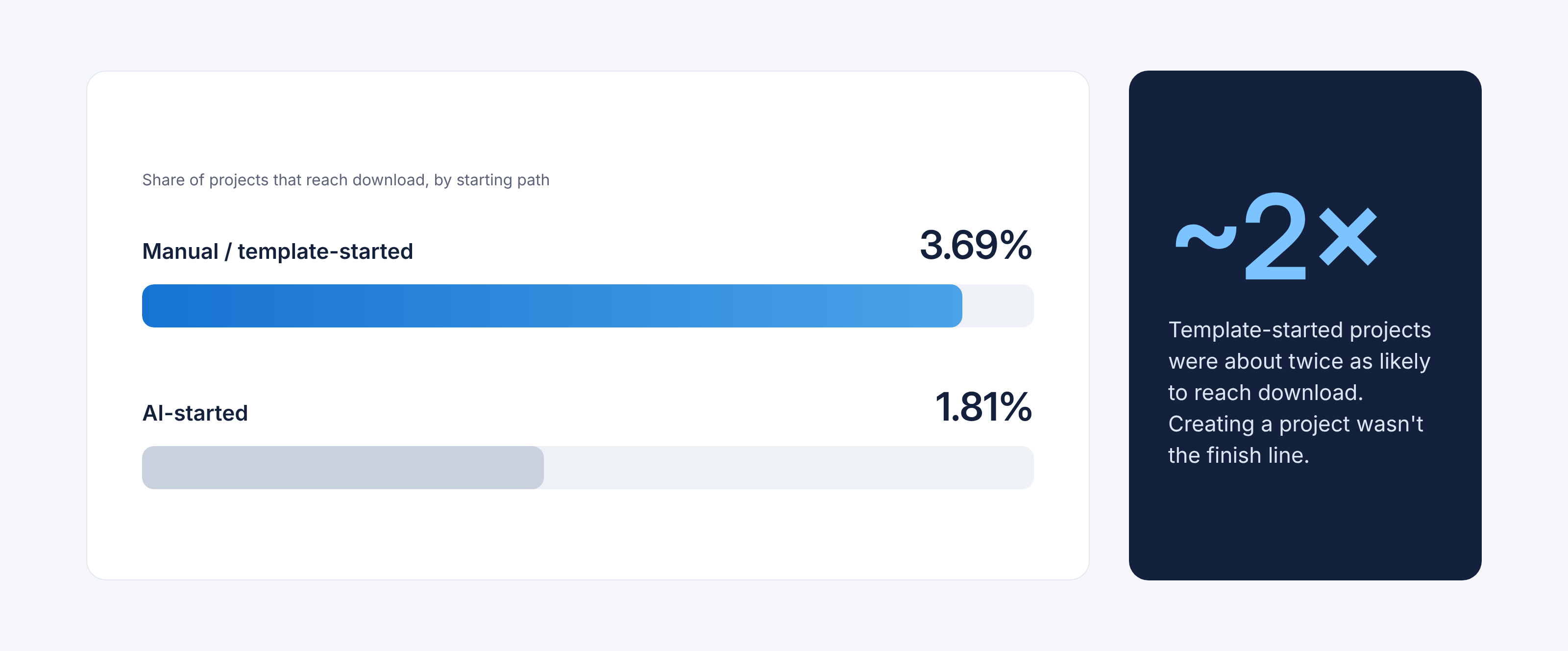
Different creation paths showed different rates of reaching download, highlighting the importance of looking beyond project creation alone.
I also designed and analyzed a survey of 404 template users across four markets. We found that 55.2% used template libraries to find specific slides or layouts, while 37.1% of business respondents reported combining slides from multiple templates. In open-ended responses, 25% of business users described difficulties finding all the components they needed or combining content from different templates.
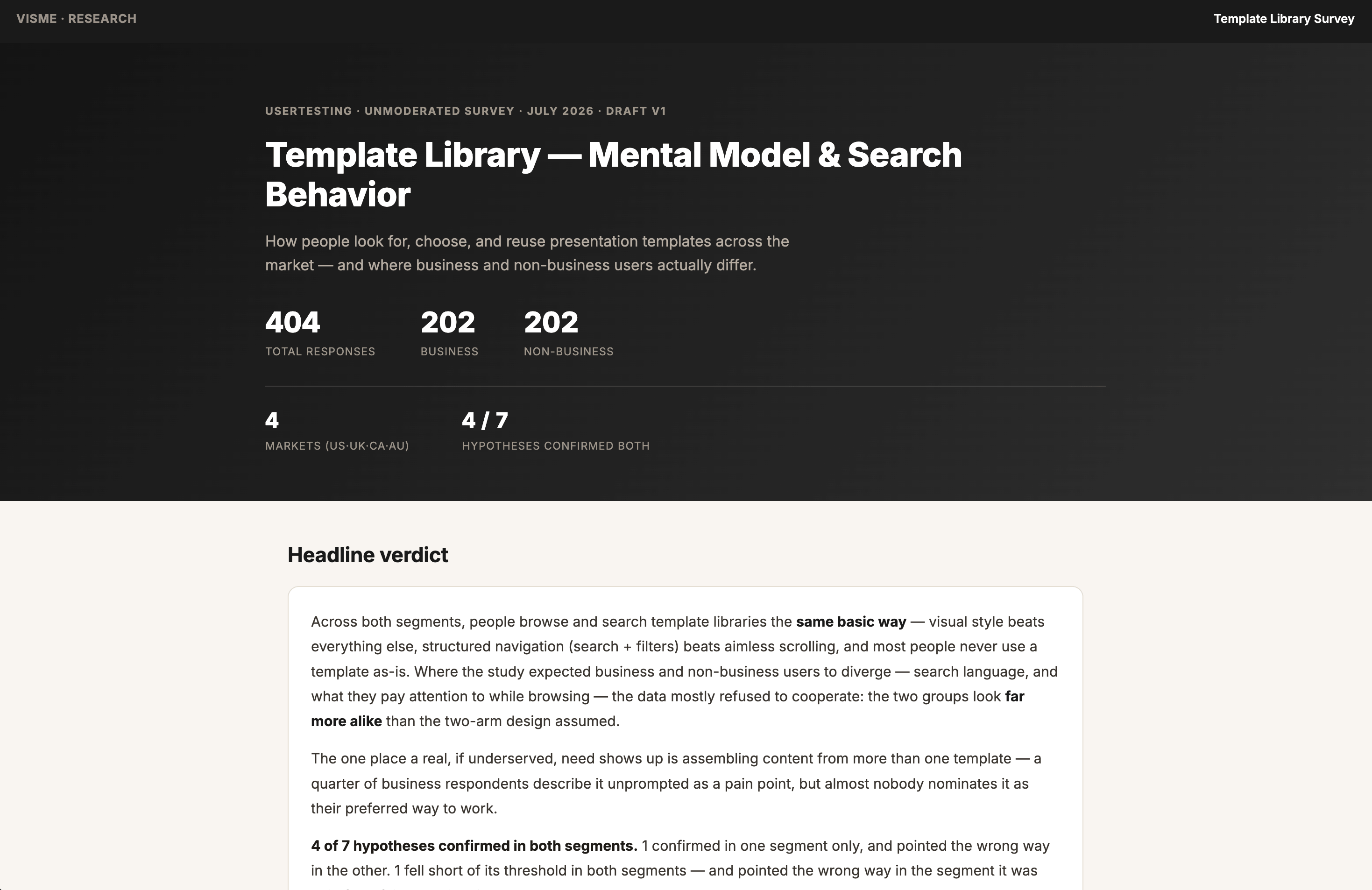
I designed and analyzed a 404-respondent survey across four markets, then published the findings in a dedicated research report website.
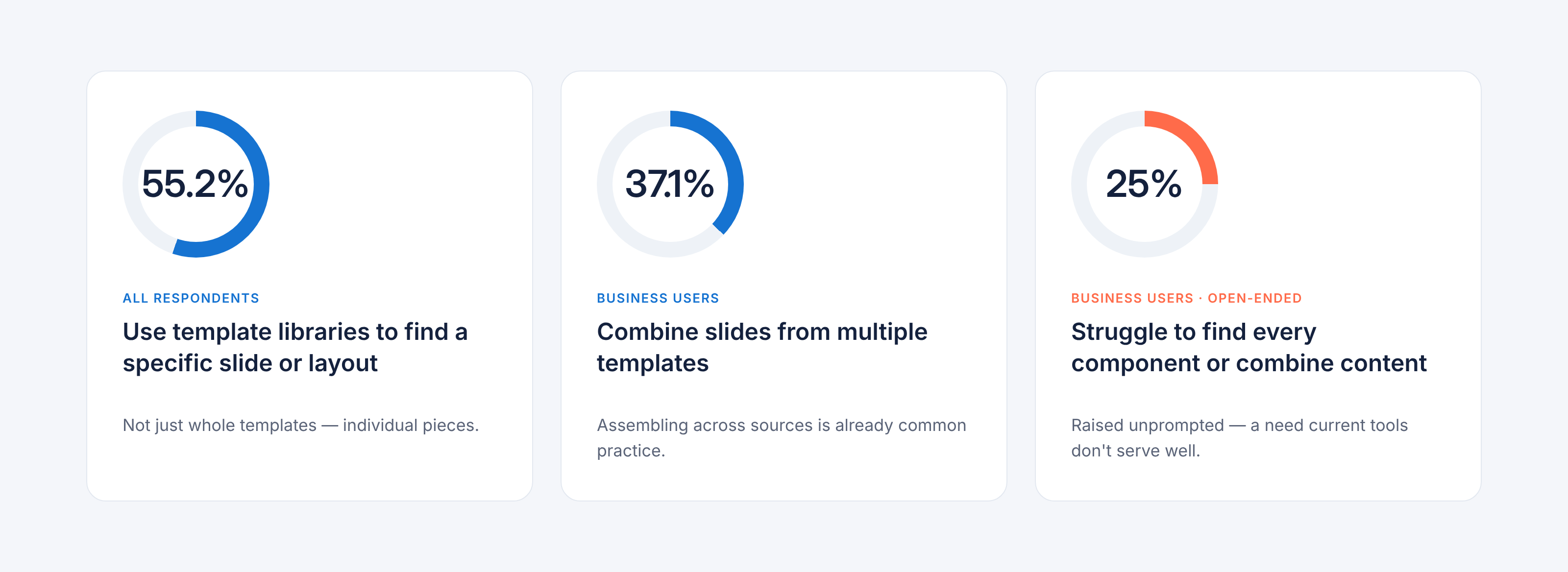
The survey revealed how users search for individual slides, combine content across templates, and encounter friction when assembling presentations.
Additional company research reinforced the importance of existing content, with 42% of 132 respondents mentioning previous presentations or company templates as sources.
Together, these findings highlighted two opportunities: helping users start with their own content or AI more easily, and allowing them to continue assembling content from multiple sources as their projects evolve.
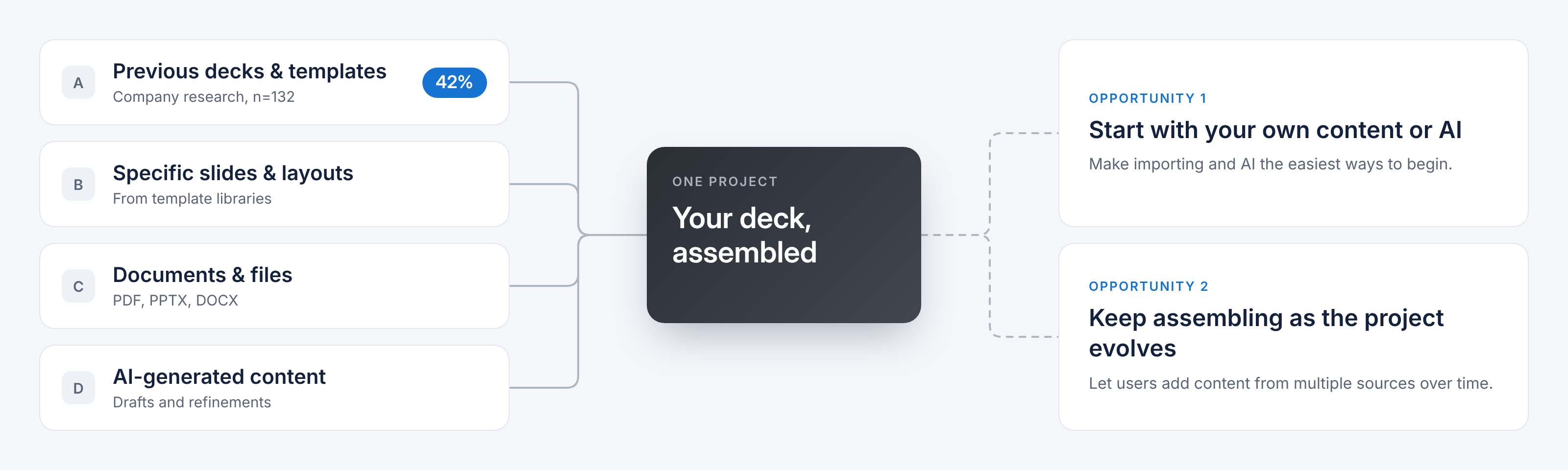
The research pointed to two opportunities: making it easier to start creating and supporting content assembly from multiple sources throughout the journey.
Design Exploration
Building on these insights, I explored an editor-first creation journey around three stages: Land in the editor, Start from different sources, and Assemble content as the project evolves.
The concept brought AI, existing files, and templates together as flexible starting points. I also explored an Add flow that would let users bring individual slides and pages from templates, past projects, files, or AI into the same project, reflecting how people reuse and combine existing content.
Explored for a later phase: adding slides from templates, past projects, files, or AI — right from the slide panel.
Through discussions with the PM and leadership, I refined how the starting options were presented. Early concepts showed many creation choices at once, while later iterations simplified the navigation and gave file upload and AI clearer emphasis.
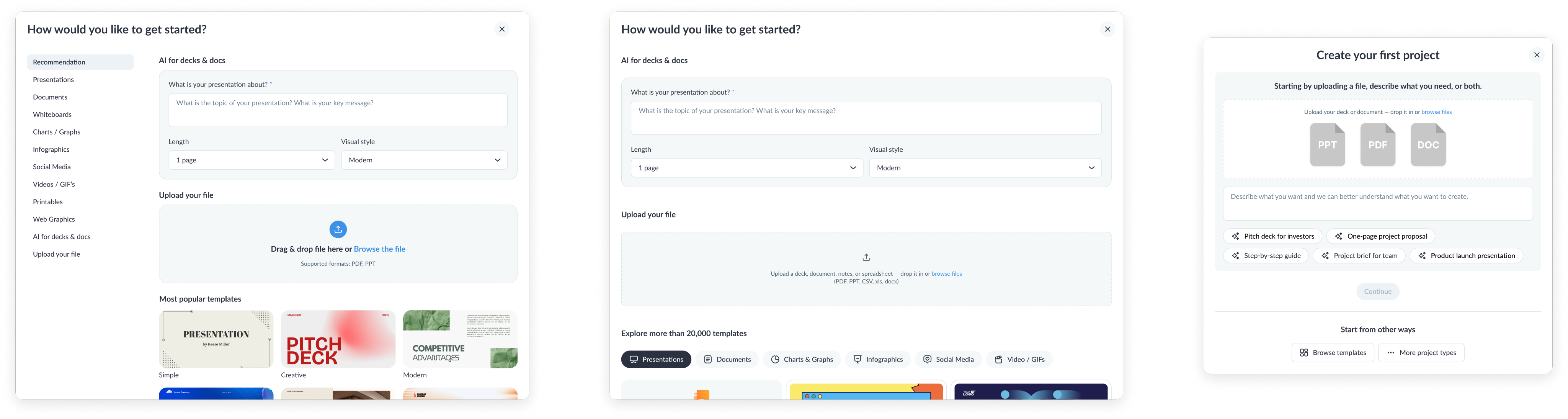
Exploring different ways to organize creation options, from a feature-rich entry screen to a more focused starting experience.
Final Direction
The broader concept involved two separate hypotheses: changing how users start creating and changing how they continue building content. To evaluate them independently, we prioritized the onboarding entry experience for the first A/B test and kept the broader Add flow for a later phase.
The final proposal brought new users directly into the editor, with Import and AI as the two primary starting paths. Templates and blank creation remained available as secondary options.
The team aligned on this direction as an A/B testing proposal against the existing onboarding flow, aiming to evaluate its impact on early activation before considering a wider rollout.
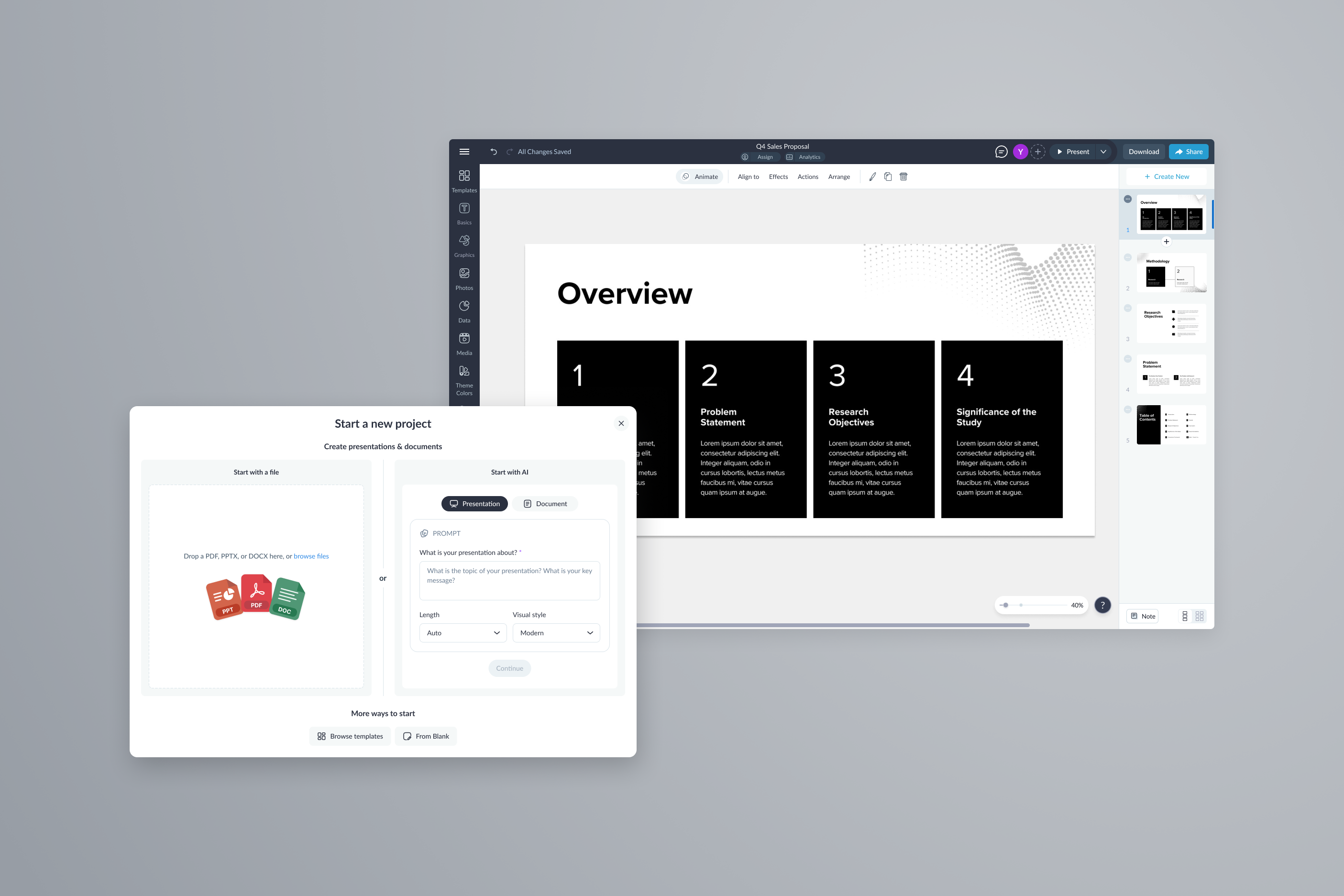
Users can upload an existing PDF, PPTX, or DOCX file to start a new project and continue creating directly in the editor.
After aligning with product leadership, this version was selected for engineering development and a live A/B test against the existing onboarding experience. The experiment will measure its impact on early activation before any decision on a wider rollout.
Users can describe what they want to create and use AI to generate a starting point for their presentation or document.
Outcome
The project resulted in a leadership-aligned editor-first onboarding design selected for engineering development and live A/B testing.
By narrowing a broader creation vision into a focused first phase, we established a clear direction for validating the onboarding experience. The project is still in progress, with experiment results yet to be measured.

Back to Top


© 2026 Mason Chang.
Reimagining Visme Onboarding for AI-Powered Content Creation
Turned funnel data and user research into an editor-first onboarding concept designed to bring new users straight into creation through Import and AI, and aligned with leadership on the direction.
Overview
Visme is an AI-powered visual content creation platform that helps individuals and teams create presentations, documents, and other visual content.
I worked on reimagining the onboarding experience to help new users start creating faster. Through funnel analysis, user research, and design exploration, I developed an editor-first concept that gained leadership alignment and was selected for engineering development and a live A/B test.
My Role
- Analyzed funnel data and user journeys with the PM, and ran a 400-respondent survey on how people use template libraries.
- Led UX exploration and developed editor-first onboarding concepts, from the first screen to the Add flow.
- Collaborated with product and design leadership to align the direction and scope the first experiment.
Context
For new users, creating their first project is a key step toward experiencing Visme's value. They can start with AI, templates, blank projects, or existing files.
However, the existing onboarding took users through setup steps and a dashboard before they could reach the editor, adding decisions before the actual creation process began.
Users can explore different ways to start a project through the dashboard, Create menu, or template library.
The editor is where users build and refine their projects after choosing how to start.
The Challenge & Goal
The existing onboarding required new users to complete a multi-question segmentation survey and navigate several creation options before reaching the editor. Reviewing these questions, we found that many primarily served business and marketing needs rather than helping users start creating.
Funnel data showed that 57.9% of newly registered users did not create their first project during the measured period, highlighting significant drop-off before first project creation.
Our goal was to reduce friction in this early journey and help more users reach their first meaningful creation faster, rather than simply increasing the number of empty projects created.
The existing onboarding flow takes users through multiple setup steps and creation options before they can reach the editor and start creating.
New users had to complete an eight-question onboarding survey before reaching the dashboard and choosing how to start their first project.
Research & Insights
To understand what was holding new users back, I audited the existing onboarding experience and worked with the PM to analyze funnel data across different creation paths. The data showed that AI-started projects reached download at 1.81%, compared with 3.69% for manual/template-started projects — highlighting the importance of looking beyond project creation alone.
Different creation paths showed different rates of reaching download, highlighting the importance of looking beyond project creation alone.
I also designed and analyzed a survey of 404 template users across four markets. We found that 55.2% used template libraries to find specific slides or layouts, while 37.1% of business respondents reported combining slides from multiple templates. In open-ended responses, 25% of business users described difficulties finding all the components they needed or combining content from different templates.
I designed and analyzed a 404-respondent survey across four markets, then published the findings in a dedicated research report website.
The survey revealed how users search for individual slides, combine content across templates, and encounter friction when assembling presentations.
Additional company research reinforced the importance of existing content, with 42% of 132 respondents mentioning previous presentations or company templates as sources.
Together, these findings highlighted two opportunities: helping users start with their own content or AI more easily, and allowing them to continue assembling content from multiple sources as their projects evolve.
The research pointed to two opportunities: making it easier to start creating and supporting content assembly from multiple sources throughout the journey.
Design Exploration
Building on these insights, I explored an editor-first creation journey around three stages: Land in the editor, Start from different sources, and Assemble content as the project evolves.
The concept brought AI, existing files, and templates together as flexible starting points. I also explored an Add flow that would let users bring individual slides and pages from templates, past projects, files, or AI into the same project, reflecting how people reuse and combine existing content.
Explored for a later phase: adding slides from templates, past projects, files, or AI — right from the slide panel.
Through discussions with the PM and leadership, I refined how the starting options were presented. Early concepts showed many creation choices at once, while later iterations simplified the navigation and gave file upload and AI clearer emphasis.
Exploring different ways to organize creation options, from a feature-rich entry screen to a more focused starting experience.
Final Direction
The broader concept involved two separate hypotheses: changing how users start creating and changing how they continue building content. To evaluate them independently, we prioritized the onboarding entry experience for the first A/B test and kept the broader Add flow for a later phase.
The final proposal brought new users directly into the editor, with Import and AI as the two primary starting paths. Templates and blank creation remained available as secondary options.
The team aligned on this direction as an A/B testing proposal against the existing onboarding flow, aiming to evaluate its impact on early activation before considering a wider rollout.
Users can upload an existing PDF, PPTX, or DOCX file to start a new project and continue creating directly in the editor.
After aligning with product leadership, this version was selected for engineering development and a live A/B test against the existing onboarding experience. The experiment will measure its impact on early activation before any decision on a wider rollout.
Users can describe what they want to create and use AI to generate a starting point for their presentation or document.
Outcome
The project resulted in a leadership-aligned editor-first onboarding design selected for engineering development and live A/B testing.
By narrowing a broader creation vision into a focused first phase, we established a clear direction for validating the onboarding experience. The project is still in progress, with experiment results yet to be measured.

Back to Top
© 2026 Mason Chang. All Rights Reserved.
Reimagining Visme Onboarding for AI-Powered Content Creation
Turned funnel data and user research into an editor-first onboarding concept designed to bring new users straight into creation through Import and AI, and aligned with leadership on the direction.
Overview
Visme is an AI-powered visual content creation platform that helps individuals and teams create presentations, documents, and other visual content.
I worked on reimagining the onboarding experience to help new users start creating faster. Through funnel analysis, user research, and design exploration, I developed an editor-first concept that gained leadership alignment and was selected for engineering development and a live A/B test.
My Role
- Analyzed funnel data and user journeys with the PM, and ran a 400-respondent survey on how people use template libraries.
- Led UX exploration and developed editor-first onboarding concepts, from the first screen to the Add flow.
- Collaborated with product and design leadership to align the direction and scope the first experiment.
Context
For new users, creating their first project is a key step toward experiencing Visme's value. They can start with AI, templates, blank projects, or existing files.
However, the existing onboarding took users through setup steps and a dashboard before they could reach the editor, adding decisions before the actual creation process began.
Users can explore different ways to start a project through the dashboard, Create menu, or template library.
The editor is where users build and refine their projects after choosing how to start.
The Challenge & Goal
The existing onboarding required new users to complete a multi-question segmentation survey and navigate several creation options before reaching the editor. Reviewing these questions, we found that many primarily served business and marketing needs rather than helping users start creating.
Funnel data showed that 57.9% of newly registered users did not create their first project during the measured period, highlighting significant drop-off before first project creation.
Our goal was to reduce friction in this early journey and help more users reach their first meaningful creation faster, rather than simply increasing the number of empty projects created.
The existing onboarding flow takes users through multiple setup steps and creation options before they can reach the editor and start creating.
New users had to complete an eight-question onboarding survey before reaching the dashboard and choosing how to start their first project.
Research & Insights
To understand what was holding new users back, I audited the existing onboarding experience and worked with the PM to analyze funnel data across different creation paths. The data showed that AI-started projects reached download at 1.81%, compared with 3.69% for manual/template-started projects — highlighting the importance of looking beyond project creation alone.
Different creation paths showed different rates of reaching download, highlighting the importance of looking beyond project creation alone.
I also designed and analyzed a survey of 404 template users across four markets. We found that 55.2% used template libraries to find specific slides or layouts, while 37.1% of business respondents reported combining slides from multiple templates. In open-ended responses, 25% of business users described difficulties finding all the components they needed or combining content from different templates.
I designed and analyzed a 404-respondent survey across four markets, then published the findings in a dedicated research report website.
The survey revealed how users search for individual slides, combine content across templates, and encounter friction when assembling presentations.
Additional company research reinforced the importance of existing content, with 42% of 132 respondents mentioning previous presentations or company templates as sources.
Together, these findings highlighted two opportunities: helping users start with their own content or AI more easily, and allowing them to continue assembling content from multiple sources as their projects evolve.
The research pointed to two opportunities: making it easier to start creating and supporting content assembly from multiple sources throughout the journey.
Design Exploration
Building on these insights, I explored an editor-first creation journey around three stages: Land in the editor, Start from different sources, and Assemble content as the project evolves.
The concept brought AI, existing files, and templates together as flexible starting points. I also explored an Add flow that would let users bring individual slides and pages from templates, past projects, files, or AI into the same project, reflecting how people reuse and combine existing content.
Explored for a later phase: adding slides from templates, past projects, files, or AI — right from the slide panel.
Through discussions with the PM and leadership, I refined how the starting options were presented. Early concepts showed many creation choices at once, while later iterations simplified the navigation and gave file upload and AI clearer emphasis.
Exploring different ways to organize creation options, from a feature-rich entry screen to a more focused starting experience.
Final Direction
The final design brings new users directly into the editor, with Import and AI as the two primary starting paths. Templates and blank creation remain available as secondary options.
The broader concept combined two separate bets: where users start, and how they keep building content. To evaluate them independently, we focused the first test on the entry experience and kept the Add flow for a later phase.
Users can upload an existing PDF, PPTX, or DOCX file to start a new project and continue creating directly in the editor.
After aligning with product leadership, this version was selected for engineering development and a live A/B test against the existing onboarding experience. The experiment will measure its impact on early activation before any decision on a wider rollout.
Users can describe what they want to create and use AI to generate a starting point for their presentation or document.
Outcome
The project resulted in a leadership-aligned editor-first onboarding design selected for engineering development and live A/B testing.
By narrowing a broader creation vision into a focused first phase, we established a clear direction for validating the onboarding experience. The project is still in progress, with experiment results yet to be measured.

Back to Top
© 2026 Mason Chang. All Rights Reserved.